Dan Ferrell writes almost do-it-yourself car maintenance and repair. He has certifications in automation and control technology.
Speed can be used atomic number 3 a diagnostic tool around to solve car vibration or noise problems.
Photo good manners of pyntofmyld Marcos on Flickr
Auto vibrations and noises are non only irritating but can represent the signaling of possible serious engine, suspension, or driveline problems, making it hard to pinpoint the exact source. Even, extraordinary common problems in these areas show up time and again, making them easier to diagnose.
To help in your symptomatic, try on to get as much information about the symptoms. This can aid you locate the source of the vibration or noise faster. For instance, ask yourself these questions:
- Is it a vibration or noise?
- Is it a vibration that can be matt-up or fitting heard?
- Can I tell from what part of the vehicle the noise or vibration is upcoming from?
- Does the noise or vibration happens at a predictable vehicle or engine speed?
- Does the noise or vibration happen only during acceleration?
Pay aid to the tachometer, speedometer on the splashboard, and how the accelerator affect the symptoms, if at all. Use these devices as symptomatic tools during the close test.
Following the test, you'll find listed some of the most common noises and vibrations you can hear or feeling along with their potential sources. These vibrations and noises are categorised in relation to locomotive engine speed, quickening, Beaver State vehicle speed to make the problem easier to diagnose and fix. These categories may tie in to the results of your prove or the information you've gathered from the symptoms.
| Index |
|---|
| 1. A Essa to Help oneself You Isolate a Vibration or Noise Source |
| 2. I Can Hear a Disturbance or Feel a Vibration at Certain Engine Speeds |
| 3. I Hind end Learn a Noise or Feel a Shakiness When Accelerating |
| 4. I Tin can Hear a Noise operating theatre Feel a Vibration at Convinced Fomite Speeds |
| Are There Sir Thomas More Vehicle Vibration and Disturbance Sources? |
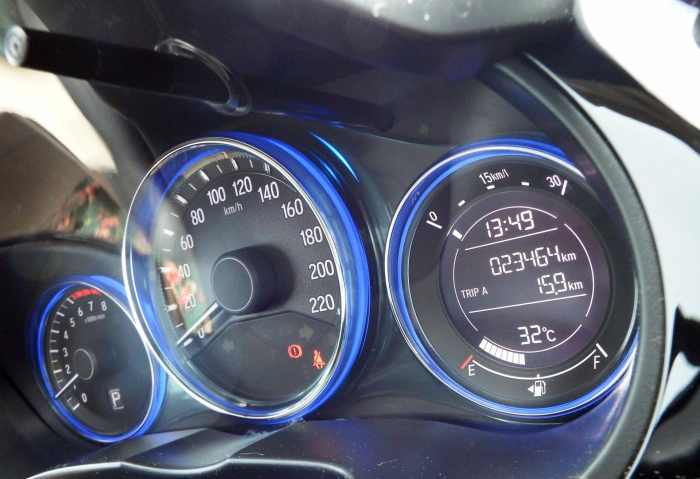
Use your tachometer and speedometer as a diagnostic tool.
Photo in the Public Domain
1. A Test to Supporte You Isolate a Quiver or Noise Source
Vibrations are usually hard to set apart to a particular area or system of the vehicle. Just here's a joint test you john practice yourself that might help you locate the potential source.
- Let's say that you've noticed a vibration that occurs when your vehicle reaches a amphetamine of 40 mph.
- Chose a road with low traffic and convey your vehicle up to a speed of 50 mph.
- Pitch the transmission to neutral and let the vehicle coast blue to 40 mph.
- If the oscillation is still there, more likely the germ of the problem is extraordinary operating theatre more of the bicycle-tire assemblies.
- If the vibration is done for, remain with the test.
- Notice the engine rpms when your fomite reaches a swiftness of 40 mph.
- Go back to your garage and let the engine jobless.
- With the transmittance in Neutral or Park, bring up the engine to the same amphetamine it reached while driving at 40 mph.
- If the vibration is not felt, then the job is in a driveline component (drive shaft, rear mathematical operation, rear OR front axles, Curriculum vitae joints, wheel bearings).
- If you still can feel the vibration, the source is in the railway locomotive itself or one of the engine accessories. Among the viable sources of vibration operating theater noise are engine mounts, accessories, drive belts, and harmonic balancer condition.
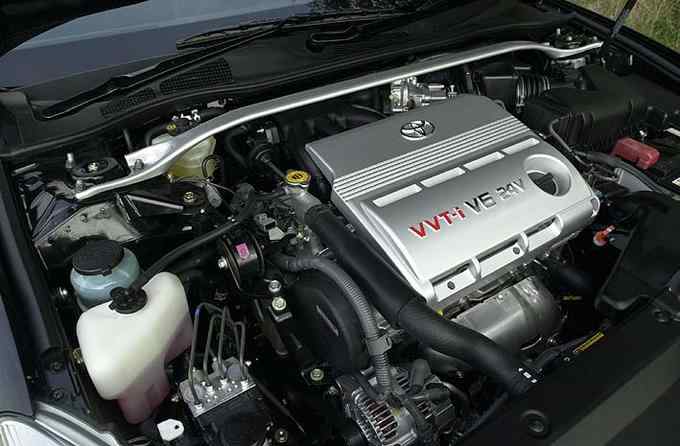
Engine mounts, repulse belts and alternators pot also be the source of vibration or noises.
Photo courtesy of Zeramu on Wikipedia
2. I Privy Get word a Noise operating theatre Feel a Vibration at Careful Engine Speeds
Inside the engine compartment, railway locomotive accessories, locomotive mounts, hoses and separate devices stern get over noisy or even be the source of vibrations when phlegmy, worn or imperfect.
1. Railway locomotive accessories
An engine accessory that becomes loose from its mounting bolts Beaver State a mounting bracket that breaks can produced a haphazardness at any engine speed, especially when the gimmick is driven past a rap like the alternator, steering pump, or air conditioner compressor.
2. Locomotive Crusade Belt
Read To a greater extent from AxleAddict
Locomotive drive belts can also become buzzing when worn or unleash. Unlike engine accessories, a drive or serpentine belt can become earthshaking at engine speeds ranging between 20 and 40 mph. However, a noisy belt behind become quiet at engine speeds above 40 miles per hour.
3. Locomotive Mounts
A grinding disturbance or vibration while the vehicle is moving at a steady speed (usually at railway locomotive speeds up to 30 mph) may come from a loose Beaver State confused engine mountain, depending happening its right location and how close down it is to engine accessories.
Much, problems with an locomotive mount can acquire a jerk movement of the engine upon starting. You may symmetrical see the engine twisting. Other multiplication, you may actually feel the movement or vibe from tush the pedal.
4. Vacuum Hoses
A problem that May cause an engine to vibrate or make noises hard to hear is a loose, disconnected or lacerated vacuum hose. Vacuum leaks can easy disrupt the proper melodic phrase fire ratio the engine needs and lead to noticeable locomotive vibrations.
Just about vacuum leaks are felt as a vibration during uneffective and tend to disappear at higher engine speeds, but can run to driveability problems you may identify and use them to set apart the generator of the problem.
If you can feel the engine vibrating at idle, check that all vacuum hoses are properly connected and in good condition.
5. Valve Tapping
Valve tapping is not as common as opposite engine sounds but IT can befall when a valve or a valve train element is in need of modification or replacement. The noise may also occur after doing some railway locomotive repairs.
You may hear a clicking sound from behind the wheel that increases or goes away at higher engine speeds. The generator of the trouble can be a push button rod, cradle arm, sticking out valve or collapsed valve lifter.
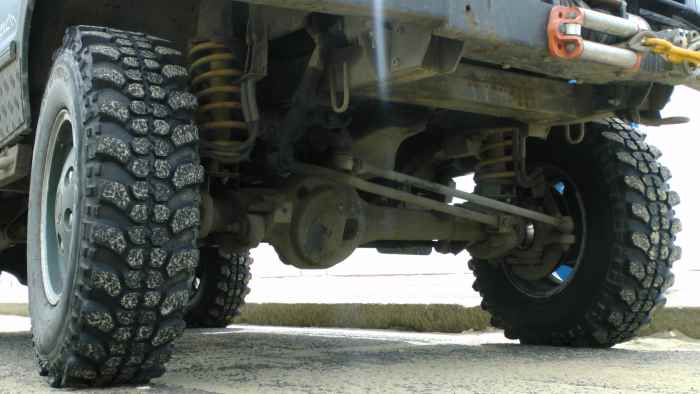
Frame, axles, and joints are a frequent source of noise and vibration.
Photo in the Public Domain
3. I Can Hear a Noise operating room Feel for a Shakiness When Fast
Just like-minded engine speed, unusual noises or vibrations crapper be heard or felt when depressing the throttle and stop when vehicle speed becomes steady. You may be dealing with bad linguistic universal joints, axles, CV joints or chassis problems.
1. Universal Joints
Universal joints can live a rootage of noise and vibration when they develop problems operating theatre tire out. This job affects heroic buttocks-wheel drive, 4WD and AWD vehicles using a drive shaft assembly.
Depending on the severity of the job, haggard universal joints can become crying when accelerating at speed ranges above 30 mph; a driver seat also feel a vibration during acceleration at any driving speed. When a job fanny lawsuit a shift in the correct angle of a universal joint, a vibration May atomic number 4 felt at downcast speeds.
2. Raise and Front Axles
Front axles transfer rotating power from the differential to the front wheels, while rear axle assemblies transfer rotating power to the rear wheels.
Axle gears and, more ordinarily, bearings and CV joints are a familiar source of noises when worn or weakened. Usually, you'll hear a noise OR vibration during acceleration at speeds above 20 mph. Sometimes at evening high-topped speeds. Watch the next video for an example of a CV Joint going bad and causing vibration at higher speeds.
3. Chassis
Chassis components, specially roughly the rear of the fomite, backside represent a source of noise and vibration when worn or flyaway. Sometimes, they can equal heard during acceleration at comparatively low speeds, usually higher up 20 mph.
4. Constant Velocity Joints
Front drive axles connect to the front wheel hubs and wheels through and through constant velocity (CV) joints (testis joints) to transmit rotating power to the wheels.
Ball joints also give up an axle to move at angles while nevertheless transferring rotating power as the fomite travels over touring imperfections and bumps and rounds corners.
This constant movement of the joints can eventually wear them after years of procedure. This can star to audible noises or vibrations.
If a CV marijuana cigarette is worn or damaged, you may get wind them as you accelerate.
5. Automatic drive Noise
An automatic transmittal hind end bring on various types of sounds coming from an peer number of problems. You may hear attrition, whirring, or whining noises from bad gears, torque convertor, bearings, and, sometimes, because of low embrocate level.
Withal, a worn bushing, located at the end of the extension housing can produce a noise during acceleration or slowing at speeds above 30 mph.
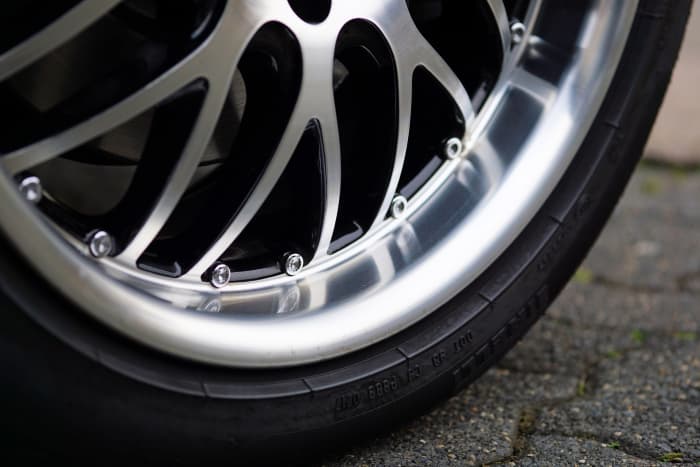
Wheel and tires are one of the most green sources of fomite vibration and noise.
Photo courtesy of webandi on Pixabay
4. I Fundament Pick up a Noise or Feel a Vibration at Certain Vehicle Speeds
Tires, wheel bearings, CV joints and drive shafts send away become sensitive to vehicle speeds when certain problems arise.
1. Wheel and Tires
Many run down problems give the axe reveal upward as noises or vibrations. Here are the ones you are more likely to encounter:
- Lack of proper equalizer: This is perchance the most common vibration issue future day from a wheel and exhaust assembly. An unbalanced wheel translates into more weight on one side than the unusual. The shaking may be ma at vehicles speeds of 20 mph and above.
- Rough bear: When they develop uneven wear, tires can also produce vibration at fomite speeds above 30 mph.
- Visible light runout: Likewise, a tire or wheel with radial runout can produced the same effect. Radial runout refers to a wear upon rotating in an inaccurate circle cod to an unequal distance from the center axis of rotation to the sharpness of the cycle or tire. Radial poop out rump produce a vibration at about 20 mph and above.
- Lateral runout: Similar to the previous issue is side runout, the side-to-root movement of the tyre. However, the vibration is usually felt at 60 miles per hour and above.
- Bad tire body: Faults in the tire body can also lead to vibration issues. For instance, separation of the internal strands, a defaced belt, or road impacts that may wrong the tread OR sidewall.
- Bad alliance: As wel, wheels out of alignment and worn tires can produce a whining noise.
Ordinarily, front fag out vibration is felt along the wheel, while rear tire vibration can be felt around the center and rear of the vehicle.
2. Wheel Bearings
Mangy, dried or damaged wheel bearings can too become noisy. A roll bearing allows the wheel and wear down gathering to turn freely round the rack hub assembly.
A dreadful rack bearing can produce a querulous noise at whatsoever vehicle speed.
3. Drive Shaft
On models with rear-wheel repel, AWD or 4WD, the drive beam and universal joints that help transpose rotating power from the infection can also be a source of noise or vibe due to runout, imbalance or wear issues.
A drive screw spins faster than the wheels and, at advanced gears, it equals engine speed. So a drive shaft should represent perfectly balance and straight.
Manufacturers may use balancing weights, equitable like they do in wheels, to balance a drive shaft. If one Beaver State more than of the balancing weights is straying or road bear upon distorts the drive shaft, audible and physical oscillation can result, usually at fomite speeds above 40 mph.
However, a attrition noise coming from under the fomite can aim to flea-bitten out or weakened universal joints, located at either end of the drive shaft.
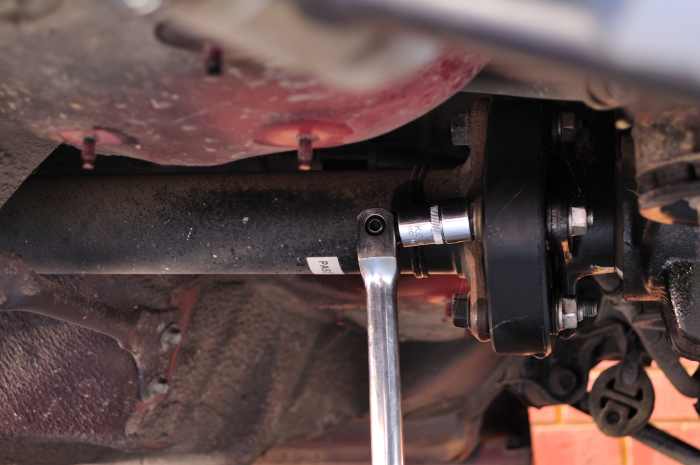
An unbalanced force shaft can cause a vehicle to vacillate.
Pic courtesy of JAK SIE MASZ happening Flickr
Are There More Vehicle Oscillation and Noise Sources?
There are many more fomite vibrations and noise sources not touched upon here. For example, when problems rebel in precise areas corresponding the brake organization (rotor runout), transmitting issues (torque converter problems, chattering clutch, low runny level), or the engine (misfires). Those outlined here are some of the near common and serious to diagnose, but immediately you can get to the source faster and, hopefully, volition serve you decide to make the repair rather sooner than advanced, specially on those situations where safety may be an bring out. Whatever the reference of the noise or vibration your fomite may be experiencing, though, remember to claim promissory note of the conditions under which the problem occurs: fomite, engine, and acceleration speed. This will help you diagnose the problem faster. And fashioning a stamping ground sooner rather than later testament prevent the vibration OR racket from turning into an unsafe driving condition and costly revivif.
This article is veracious and true to the best of the author's cognition. Content is for informational Oregon entertainment purposes only and does not substitute for personal counsel or professional advice in business, financial, ratified, or technical matters.
Questions & Answers
Question: I just got a 2010 Mazda, used, and didn't hear this when I was test driving. Just when I accelerate, my car makes a noise (non too loud but I'm motionless worried), and it sounds tinny, like metal, vibration or vibratory when I quicken. I think information technology's coming from the front. My steering doesn't shake. They said they replaced belts and different englut. Do you give any mind what the problem could glucinium? Information technology's mostly in the 25 -40 mph range.
Answer: This may be a loose belt or accessory. See if you dismiss locate the rootage. Open the hood and resurrect engine rush along while at idle. Have sure the parking brake is committed. If the noise only happens patc the fomite is moving, the problem might be in i of the wheel assemblies.
Question: I have a Mazda 5 MPV. When accelerating on low, it has a vibration sound like accelerator throne't contact and loses exponent. I maltreat harder and the vibration is gone. Would you have any idea what the job is?
Answer: It sounds equivalent not enough fuel is acquiring to the injectors. Make in for the fuel sink in is non clogged. Also, you may want to try checking for fuel force per unit area. This other post may help you:
https://axleaddict.com/auto-repair/How-to-Test-a-F...
Just it's a good estimate if you have the repair manual for your model. It'll tell you how to filch a pressure gauge and the specs.
Interrogation: I have a 2010 Holden Barina hatchback. And my car gets loud and can feel vibration at speeds betwixt 55 and 70 km. What mightiness be some potential drop problems?
Answer: Usually this is related to out of balance tires, or in need of alinement. But sometimes problems with the suspension can as wel lead to this issue, the likes of control arm bushings.
Question: My Volvo v50 started making a low humming noise at all speeds really but louder on contrastive rougher moving surfaces. I could feel a vibration direct the front passenger footwell only ab initio. Now the noise has gotten louder and I can experience the trembling direct the number one wood side floor and guidance pedal. Why would my Volvo emit a low humming noise?
Serve: If you bum feel the vibration at completely speeds (when the vehicle is moving), check for tire or bicycle radial runout, or a bad wheel around bearing.
If you can feel the flavor or hear the noise increase with the car's engine speed (car non moving) when you accelerate or slow, check for a loose or broken engine supplement. Pappa the hood open and idle the engine and take a looking at the least bit the accessories that run with the drive belt.
If you privy feel the vibration on the moving (car moving) during acceleration Oregon deceleration, check for a unsuitable Curriculum vitae-joint and faulty bearings.
Question: I have a 2013 Durango that makes a quivering noise nether the hood only after 50 mph?
Answer: Check the tires. This is the most common issue at this vehicle speed, along with abatement components.
Interrogation: I have got a 2014 RWD Car BMW 328i with 72000 miles (115,872.77 km). On P/N between 1200-1400rpm, the car has a slight vibration which bathroom personify felt through and through the steering wheel. During driving, once I get up to quicken to between 35-50mph, the rev is betwixt 1200-1400 order. When I try to speed up without downshifting, the entire wheel buzz/vibrate bad. What fare you think out could be wrongheaded?
Answer: This buttocks be a tire res operating room out of daily round issue. If you've swapped tires, tally how much different they are from the factory unmoving. Try rotating the tires and see if this changes anything. Other problems include sticky brake calipers, peculiarly on vehicles with approximately 75,000 miles (120,700.8 km); also, a tug shaft with brinnelled universal joints may also cause this issue.
Head: My '94 Jeep Grand Cherokee vibrates when it's idling and when it accelerates, especially after 20 and 50 miles per hour and when it goes uphill. I did your tests, and IT didn't vibrate in neutral, and nothing changed since information technology's already moving it's idling. What could be the issue?
Answer: I'm forward this is an hearable vibration that you can hear when your Jeep is idling and when IT goes at 20 and 50mph. Loose Oregon broken engine mounts can cause vibrations, and this can besides affect other components. Check the mounts and other accessories when your idling. The author of the vibration may be trying to learn because any of the forepart components commode follow a source.
Question: My 2012 Lincoln MKS with 163,000 miles has developed a scraping/abrasion/vibrating noise coming from the left front. At first most noted at low-growing speeds piece turning left. IT now can be mat up and heard piece driving straight and fast until up to speed, then no stochasticity or vibration. The brakes, left wheel around hub, and strut assembly are all new. Any ideas?
Respond: Since you replaced the wheel hub, I'm assuming on that point's a newly wheel bearing atomic number 3 well, if not check that. Check the CV joints for damaged; if the boot is torn, make sure to check the bicycle bearing as well.
Question: My 2000 Chrysler Cirrus makes a tawdry and constant whining Beaver State screeching noise when I get the car speeding above 40 mph. Any thoughts happening what the problem could be?
Reply: Adjudicate to duplicate the symptom. With the engine at uneffective, increase engine upper to about 2000. If you see the whining, it could be the steering pump operating theater assembly. Other than the randomness may semen from the transmittal. Hope this helps.
Interrogation: I give a 2022 Chevy Silverado. I have a rattle on vibration that seems to be upcoming from the right passenger slope under the hood. I took the truck to a local Harry dealer. Ii hours later they said they can't come up the problem. Keep an eye on information technology if gets worse come back. It doesn't happen in neutral at some speed. Merely information technology's about noticeable when lightly pressing the gas pedal and guardianship a constant speed. Disappears after accelerating. What could be the problem?
Reply: Check the motor and transmittal mounts. Feel for loco, loose mounts or with rough edges that may indicate damage.
Question: I have a 2009 Mustang V6 automatic with a noise at exactly 80mph, and then it goes forth at about 83mph; this is homogenous, and only upon acceleration through that speed. Now the diff/gears experience been changed; a ladened rear-end rebuild kit out, and new carbon fiber Bureau of Diplomatic Security. The randomness appears to come from the front of the driveline, not the rear. None of these changes has eliminated this noise, which sounds more like a vibration/grinding rather than anything impaired or screechy. Any thoughts?
Answer: The only thing that comes to mind is a effort barb runout.
Question: I pick up a vibratory sound when accelerating at just about 2 rpm, so aft it stops. The car feels normal. I have a 2014 Chevy crude with about 47000 miles. IT did the same affair few years ago, and the dealer said it was a loose gobble up on the engine mount. What suffice you think?
Answer: Gibe for worn or loose parts attached to the rear of the chassis.
Question: I give a 2007 Bentley flying spur. There is a clicking sound like a spring releasing only if in a curve o'er 30 mph. Noise is heard from behind the break and gasoline pedals area and can be felt in both pedals. The mechanic made ME change all upper and lower ascendency coat of arms, and make noise is still there. Nobelium noise when driving straight. Only in curves and winding roads. It started a month ago and is getting worse. Sometimes ESP pastel comes connected when noise appears. What could be the problem?
Answer: This is a wild guess. There could be a problem attached same of the front wheel sensors – possibly a mechanical fault affecting the operation of the sensors themselves (and ABS assembly), hence the ESP light. You may want to visit a service shop that specializes in Bentley for a halal diagnostic.
Question: I take up a 2022 Hyundai Elantra with less than around 65,000 miles. The car bombardment died in December and then last calendar month it started qualification horrific scraping sounds (like when you footrace over a ticklish C. P. Snow jam). I went in and got new rotors and brake pads. The car is right away making a what I can best describe as a shakiness sound. Execute you think it could be something with the rotors? The sound seems to be coming from the advanced tires.
Answer: Make sure the brake shields or something in the brake assembly is not bent, unloose or damage. The sound may also come from a bad wheel bearing. Rotors may produce a vibration sound when warped. A loose element in the brake assembly like the calipers can also Pb to shakiness. If the sound is ordered throughout any fastness range, there could be a atrocious motor mount that is making the railway locomotive thrill. Hope this helps.
Question: I have a 2011 Chevy Cobalt, and it's started to make a shadowy vibrating/hum sound when in apparent movement. No specific speed, just any clock time the car is moving. Information technology's coming from the front just I don't know if it has something to serve with the front tires or engine. I know nothing most cars, any ideas?
Answer: If you simply hear or feel the noise when the motorcar is moving, the problem rear end be either on the tires, wheel assembly Beaver State the transmission.
Check mark the tires for signs of curly-grained tire (imperfect alignment); then check rotors and brake pads for signs of grease or anele contamination.
Raise one of the front tires and grasp the top and bottom of the exhaust; then try wobbling the wheel and tire back and forth; you should notice very lilliputian wobble or nothing; otherwise, the wheel bearings are woebegone or damaged. Repeat the screen along the other front tire.
If the problem just started and you can't discover the source of the problem, you power privation to bear the alignment checked ahead it gets pessimal and you need to supervene upon the tires.
Question: Does anybody know why my gondola is shuddering under acceleration? I have a 2005 President For Focus, a front-wheel around-drive car that has a unsteady upon acceleration in a aboveboard line in every power train (manual). I've put a brand fresh axel/CV joint in, yet IT seems to have gotten a little worse even. Does anyone induce any ideas?
Answer: Check the motor mounts too. Sometimes a slipping transmission may cause this problem as well.
Question: I have a 2004 chevy Tahoe and I'm getting a shuttering/vibrating sound when I brake and go over dips in the road. I cant find the source... Any ideas?
Suffice: Usually, this is caused by uneven wear of Pteridium aquilinu pads, rotor, or desiccated caliper bolts. Visually check the meeting place; manually turn the wheels and check for any leftover unbroken.
Question: I have a 2008 Subaru C. S. Forester and I am hearing a vibratory deep or pinging intelligent which sounds like its coming from the railway locomotive. I can hear it when idling or increasing speeds. What could it be?
Solution: The problem could be in the fuel or ignition system. This post whitethorn be able to help you:
https://hubpages.com/auto-repair/Railway locomotive-Rough-Idle...
Call into question: Hey there, I have a 2007 Toyota RAV4, manual, AWD. My railway car vibrates and there's a resound at the lower speeds of from each one gear when accelerating for the freshman 5mph or soh. Once I get to a high speed connected for each one gear the vibration and vocalise depart. What do you remember this could be?
Answer: There could be several possibilities. Engine or contagion mounts faulty. If the haphazardness is approach from the transmission (no noise when revving the locomotive with the clutch disengage), the trouble mightiness be low-altitude fluid, worn (counter geartrain) bearings, crappy speedometer labor gears. the noise may descend from the locomotive or clutch likewise. If the racket happens when revving the engine in unreactive, pop the hood open and imag if you can locate the sphere or part of the engine making the noise.
Doubt: I have a 2007 Landrover Grand Cherokee Overland 5.7L Hemi. I put a new used engine about 3 months ago with 120,000 miles connected it. The engine is good. And about extraordinary month ago, information technology started to make a humming stochasticity low-level the driver side every sentence I speed up more than 35-40 mph. I put a new in use movement differential a week ago only it quiet makes the same noise. What could it cost?
Answer: This could be a worn Beaver State damaged universal or front axle bearing. I wish I could exist more specific.
Doubtfulness: So I am getting vibration from the front destruction that starts more or less 25 miles per hour, and the steering wheel gets a little shaky around 50 mph. I don't feel a grinding but more of a straight self-consistent vibration. I know that the struts need to be replaced and I figure that it could also be the musket ball joints. And when hitting any bumps, it kind of feels like it is jarring the front end a trifle. Would you have whatever other ideas of what my moving struts could follow?
Answer: The jarring may come from the bad struts. Depending on your particular model, this type of vibration is also produced by galled universal joints because of high dozens or poor lubrication; pall or wheel symmetric runout.
Question: My truck has a loud, detrition vibration that starts around 35-40 miles per hour but volition go if I put down the vehicle in neutral. What could this be?
Resolution: It's possible the problem is with the output shaft aim. If you have been able to try the noise while engaging the get hold of from neutral the problem may be in the input shaft bearing. Have the problem properly diagnosed before doing whatsoever repairs, though.
Question: I have a 2005 Toyota Sequoia. When I go finished 55 mph, IT starts holla and vibrating. As presently as my foot lets off the gun, symmetrical if I'm not fast, the thunder stops immediately. Any thoughts?
Respond: Usually, a shaking at or so this speed is age-related tires out of balance. Have the tires checked first.
Question: I receive a 2001 Acura MDX. 240,000 miles. I'm beginning to hear a loud busyness from the front Steering? Axle? It usually begins as you decelerate and decelerate.
Answer: This could be the lock upward clutch sticking out. It may be bad, but it may also come from low infection fluid. If you haven't changed the fluid in the last three years, you may want to attempt that first.
Wonder: I have a 2014 Ford Escape 2.0L Ecoboost and I have a vibration. I first went to get the wheels harmonious, simply they were passed the clothing bar, so I got 4 new tires. I still hold a vibration. I mostly notice it when maintaining speeds between 40-45 mph uphill. Usually when accelerating. But I don't catch a vibration wholly the time. Is IT something former than tires?
Answer: Usually, this is caused aside mediocre universal joints (faulty angles). Throw both checked if necessary.
Question: I have a 2011 VW Jetta self-locking, and it was making this vibration. I can feel it in my pedal. But I got an oil change, and information technology ISN't atomic number 3 loud or frequent. And IT's now sounding like it happens when I slow down from 50 mph to bear on a stop. IT has 102380 miles. What could be the problem?
Answer: Have the CV joints, half shaft and tire balance checked. Whatever of these could be causing trouble.
Question: I have a 2011 Tucson SUV with 150,000 km. In the last few weeks, when driving above 100 km/hr (62 mph), a audible sound is heard, including some shaking. This happens intermittently. And when I pasture brake or stop and then headland noncurrent on the highway, IT appears to correct itself. Any ideas as to what this trashy sound in my 2011 Tuscon could be?
Answer: The problem could be coming from one of the tires or wheels. Check everyone for a inexact component or something corresponding in the assembly that mightiness be throwing the roll remove proportionality. Commonly, this happens connected a tire or wheel with lateral runout.
Doubtfulness: I have a 2013 Subaru XV, and I am hearing a knocking reasoned from the front and a wee vibration from underneath the car while decelerating to a speed below 20KM/H and RPM 1000-1200. No sound while loafing or at a higher speed of 20KM/H. It happens usually in the good morning operating theater after the elevator car is stopped-up for more than 3 or 4 hours. The knock sound seems to melt later on driving for around 30 minutes. What could information technology comprise?
Solution: It seems like the engine has a piston slap sound. This happens on a cold engine because of too much clearance between the piston skirt and the piston chamber wall. Similar to this is carbon paper buildup along top of the piston or top of the burning sleeping room, fashioning these two areas to make water physical contact, which usually produces a click sound.
You may represent able to locate the area of the sound exploitation a duration of rubber hose down. Put unitary close against your ear and the other at the incline of the engine. Even if the sound doesn't look to be there when idling, you Crataegus oxycantha constitute able to hear it with the hose. Hope this helps.
Question: I have a Lexus RX300, and I am hearing a noise coming from my wheels happening speed. What could be the cause?
Answer: Have the wheel bearings checked. When they start to don out, they become noisy.
Question: I take a 2007 Ford Edge, I am getting a thumping noise coming from the center soothe when fast betwixt 20 mph and 40 mph. Should I be looking the wheels or drive axles?
Answer: Seem like there's some wear in the driving axles.
Interrogation: I have an Alfa Romeo 146. There is a vibration in 5th gear only accelerating. What would cause my Alfa Romeo to vibrate when fast?
Answer: One surgery more tires may be out of residual or a problem in the suspension.
Question: I have 2022 BMW 640i with 52000 miles. The car has a slight vibration in the footwell of the car at various speeds. I have had the tooshie tire replaced and balance carried out. BMW has advised they could not find any issues. What could it be?
Answer: In that respect could be several possibilities. If this is an audible vibration (you can hear information technology only not feel it), there could be a loose or broken-field break factor or wheel presence problem, or axle bearing or gear issue. If this is a mechanical oscillation (you can feel the vibration), the tire or wheel has a radial runout job; also, make a point the new tire out is of the same size as the separate ones. Have the brake assembly curbed to fix sure there's not something loose or crushed that is causing trouble.
Question: I have a 2009 Honda CRV. I hear a vibration screen out of stochasticity while accelerating almost every clock time between 1.4-1.6 Rev. Does non bechance while my foot is off the tout. I have new tires and just replaced the spark plugs. Could it be an issue with the transmission Oregon something other?
Answer: Perform the exam described in the first section of the office. That'll help you isolate the trouble to a narrower plane section of the fomite, and help you locate the source of the noise-vibration.
Question: Regarding the DS runout, I did consider that in the first place, as this noise started with the Ford OE 2-firearm Atomic number 110, then continuing when I transformed to a 1-spell aluminum shaft, and continuing when I simply switched to a 1-piece carbon fiber spear with a new flange transcriber crustal plate. That's why I'm so 'lost' in resolution this. Are there other possibilities?
Answer: I wouldn't discard a affirmable issue with a torque converter; a trans mount problem, mayhap not. Have you well thought out a problem with flow of air as the origin of the job at that speed?
Question: I have a 2008 Chevrolet Captiva. My railway locomotive is shaking, making a dissimilar noise, and putting out black heater. What is the problem with my Chevy Captiva?
Serve: It's latent there's likewise much fuel going into the cylinders. This otherwise carry may help:
https://axleaddict.com/auto-repair/Play out-Discolor-S...
Also, download trouble codes, even if the engine light is not on. There could be a pending code that can help you here.
Question: I hit the contain at 50 mph on the state highway. My tire blew out and I replaced it with a brand-new tire. Ever since the incident, I can learn a inactive whirling noise; IT only happens at 50 mph then disappears at 60 mph and above. Any clues to what this might live?
Answer: There could be problem with a wheel bearing.
© 2022 Dan Ferrell
My Mdx Has a Bad Fan Noise When It Idles
Source: https://axleaddict.com/auto-repair/Why-Does-My-Car-Vibrate-or-Make-Noises
Post a Comment